The Apple MacBook Neo’s $599 starting price is a “shock” to the Windows PC industry, according to an Asus executive.
Hsu said he believes all the PC players—including Microsoft, Intel, and AMD—take the MacBook Neo threat seriously. “In fact, in the entire PC ecosystem, there have been a lot of discussions about how to compete with this product,” he added, given that rumors about the MacBook Neo have been making the rounds for at least a year.
Despite the competitive threat, Hsu argued that the MacBook Neo could have limited appeal. He pointed to the laptop’s 8GB of “unified memory,” or what amounts to its RAM, and how customers can’t upgrade it.
Well good, maybe it’ll incentivise y’all fuckers to sell actually usable machine instead of Bordeline e-waste Celerons with a 4GB of RAM in the ultra-budget segment
Borderline?
Honestly, I’m just surprised this is the first time someone has dared to put a phone SOC in a laptop chassis.
It seemed kind of obvious to me that a laptop experience on phone hardware (but like… with a bigger screen, keyboard and mouse/trackpad) was sort of perfect for most use cases. I just assumed that it would come in the form of a phone docked in to a hollowed out laptop. The core issue was just that the software was awful with such a set up. Apple just kind of bypassed that by having their whole OS and everything on it switch over to ARM and just running a non-mobile OS on a phone SOC.
It seems like Google is kind of edging that way by merging chrome OS in to android. And windows was maybe flailing that direction with windows on arm… but… I think that was mostly just them trying to copy Apple without really thinking to hard about it.
Lol, this is far from the first time this has been done. Gotta give it to Apple marketing, they can still get away with “inventing” 5 year old technology in front of the gullible crowds.
Honestly, I’m just surprised this is the first time someone has dared to put a phone SOC in a laptop chassis.
I’m probably missing something fundamental, but isn’t this just a Chromebook?
There are some Snapdragon laptops but they’re not exactly the same as the snapdragon phone SoCs and they tend to be expensive
Apple was the only one with the vertical to pull it off
8GB of unupgradable ram is unforgivable in today’s software landscape. Even if the OS is memory efficient, running multiple software still takes ram. I get it’s a $600 laptop, but that’s still an inexcusably low amount of ram for anything but grandma and similar.
100% of my job is word processors, medium sized spreadsheets, and cloud software. This laptop is perfect for me and, I’d argue, 90% of my colleagues, as a work computer.
I have zero issue with soldered on ram for a device used for the above purpose.
My home PC though, not an ideal fit.
Maybe Asus should invest more into linux and start shipping it on their laptops by default? Maybe add an improved software compatibility layer for windows apps to get more people in?
This is as believable as “air pods are for rich people”
He pointed to the laptop’s 8GB of “unified memory,” or what amounts to its RAM, and how customers can’t upgrade it.
Yes, because Asus laptops all have non-soldered RAM…
A few do have non-soldered RAM, the most expensive workstation laptop and a couple of gaming laptops; all of which are >$2000.
Yes, because Asus laptops all have non-soldered RAM…
I think what that poster was communicating is that shipping a laptop with 8GB of RAM would be okay if it was socketed (allowing for an upgrade by the user) or if the shipped unit with soldered RAM was greater than 8GB (16GB?, 32GB?,64GB? soldered).
Fair enough. Although Asus sells at least one laptop with 8 GB of soldered RAM, too.
Granted, it’s “only” a Chromebook, but still.
Soldered RAM is almost always a bad thing, no matter the size. Maybe when it’s the most the mainboard can support it’s not too bad but even then you’re out of luck if it ends up dying.
As far as I understand Apple is partly doing it because of the higher memory bandwidth, which is necessary for the way macOS manages memory. I still don’t like it but at least they’re doing it for a reason.
Fair enough. Although Asus sells at least one laptop with 8 GB of soldered RAM, too.
Granted, it’s “only” a Chromebook, but still.
Chromebooks with low RAM are fine for many use cases. I’ve got a chromebook with only 4GB of RAM and its perfectly fine for web browsing or watching streaming which is the only things I use it for.
Soldered RAM is almost always a bad thing, no matter the size. Maybe when it’s the most the mainboard can support it’s not too bad but even then you’re out of luck if it ends up dying.
I used to think that too, but then I realized that the way I use computers (and it sounds like you do too) is to keep a unit a long time, take care of it, and use it to its limits (and perhaps beyond). There are millions of users that don’t do what we do. They may be young kids that end up breaking the unit before 2 years pass. They may be a fashionista that has to change out their unit when the new fall color comes out (so they may not even own it a year). They may be an older person that only uses it to check facebook to keep up with their kids.
In all of these cases soldered RAM is just fine because the user will never reach the point they need to upgrade it. What they get in return for this is cost savings and likely a smaller (thinner?) unit, that is probably a bit more structurally sound (because it doesn’t have to have a door or clips to have the RAM sockets accessible.
For users like you and me, soldered RAM is a bad thing. For most common users they don’t care. They don’t even know what soldered RAM is.
For most common users they don’t care. They don’t even know what soldered RAM is.
They should, because when it’s time to sell the laptop one with soldered RAM is gonna be worth a lot less (at least to me).
Chromebooks with low RAM are fine for many use cases. I’ve got a chromebook with only 4GB of RAM and its perfectly fine for web browsing or watching streaming which is the only things I use it for.
Fair, but there’s still the potential of it becoming a paperweight if the RAM chips give out or Google forces AI shit into ChromeOS.
I’m suspicious.
I’m seeing social media FLOODED with Neo content. Definitely not organic.
Tinfoil hat aside, that could also be due to how disruptive it is in the tech world.
Maybe it’s just a literal bomb to everyone involved in decision making and now making the waves in the news.It could be.
But I don’t see any other PC/laptop reviews by this author. He writes mostly about cybersecurity. And his Neo articles seem a bit…biased. Compare to his other articles, which are well-researched. Example:
https://www.csoonline.com/article/563017/wannacry-explained-a-perfect-ransomware-storm.html
My guess is either someone is posting articles in his name, or he’s taking a free Neo in return for a positive review.
Maybe just a bit of both.
My guess is either someone is posting articles in his name, or he’s taking a free Neo in return for a positive review.
And a bit of both for that as well.
It’s also quite unexpected, given that it’s Apple, and they’ve traditionally made more expensive machines, with worse hardware. In my country, for example, it is nearly unheard of for a new Apple computer to cost less than four digits/US$800+.
Particularly at a time when it’s more typical to hear of new computer prices going up instead, due to shortages.
I was very surprised to hear how reasonable (to some degree lol) the iPhone and macbook was priced.
Very hard to deny that they are very interestingly priced.
Dude, the difference between you and Apple is Windows 11. They don’t have a crappy copilot or Edge hoarding 4GB in the background just to show the weather.
That’s a big difference but not all. The sub-$1000 ultrabook sector has SO MUCH garbage, like Intel Celerons that stutter when you scroll down a web page designed in 2022+. Manufacturers are happy because they can sell rubbish and uncle John with no idea about computers will say “I want a laptop with 1 TB so it’s faster, and it must have free office 365 and an antivirus”…
So when someone puts a phone processor in a laptop and builds a chassis that isn’t a $5 extruded plastic shell, they panic because it still manages to be better in both benchmarks and real world use despite the paltry amount of RAM.
Exactly. They should start installing Linux Mint and call it a day.
Fuck Microsoft.
Indeed. PC manufacturers should just invest in the Linux ecosystem.
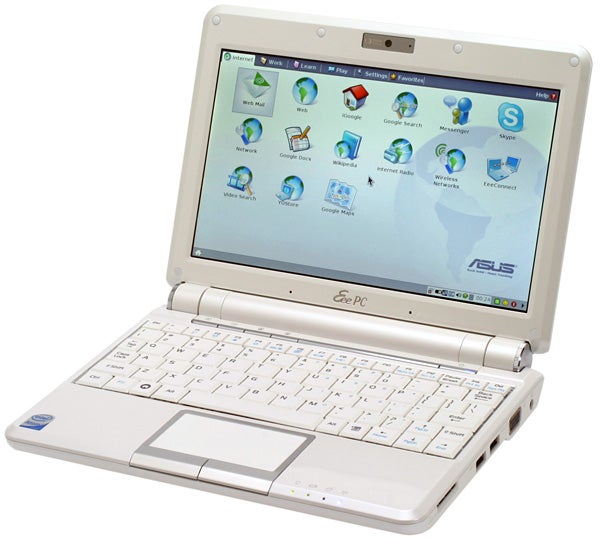
What, like Asus did back in 2007?
Unfortunately, these particular devices were kinda shit lol
Eh, I gather the Linux based ones were actually pretty cool. But 99% of netbooks ended up being underpowered mini laptops running XP, so were doomed to failure.
EEEs were amazing! Not because of their performance or specs, but because they were a fully working compute for dirt cheap at only $199! Remember, these were released 5 years before the first Raspberry Pi. The original model of EEE with its 7" screen 512MB RAM and 4GB of slow SSD storage were plenty of compute for small tasks or portable applications. The cheapest fully functional laptop you could buy at retail those days would still cost you $800-$900 for a pretty horrible machine.
Linux was part of the secret sauce that made them successful because it meant they didn’t have to pay for an OEM Windows XP license.
yet
He also described the MacBook Neo as a “content consumption” device, similar to an iPad. “This is different from the use case of a mainstream notebook," which can handle more compute-intensive tasks, Hsu said.
I don’t know what Windows have out of the box but is MacBook really content consuming device ?
Free build in OS offline office apps Word = Pages, Excel=Numbers, Power Point = Keynote, Notes, Calendar, Email, Reminders, PDF viewer = Preview, movie editor = iMovie, Journal, Password Manager = Keychain, Maps app ( yes you can download parts of map to use offline), Garage band where you can connect your midi devices and record them.
It has a mobile SOC which thermally throttles pretty aggressively, memory capped at 8gb, and a pair of confusing USB-C ports one of which is limited to USB 2.0 speeds.
It’s actually a bit faster than the M1 and most M1 owners are still not upgrading because there’s no real need. So you could reasonably do productivity things that aren’t heavy ass 3D modelling or video editing. But with 8 gigs of RAM it’ll swap a lot, wearing down the SSD eventually.
I wouldnt have said content consumption but it is going to be a hit with students who will basically use a browser for everything. They have cloud office suites by default and apple has student subscriptions to offer.
The perfect time for a relatively cheap Apple laptop when Microsoft is forcing people to buy new hardware just to use their latest version of their operating system. I wonder what the percentage of Microsoft folks who go to the MacBook will be. I wonder what the percentage of users who go the UNIX/Linux route would be. I’m not an apple fan myself so would go linux, but a good business move from Apple though.
Apple user share is beneficial for Linux user share.
That would be interesting to watch.
If I ever had to buy a personal laptop again, it’d definitely make the list.
Obnoxious hardware prices are what kept me off mac for so long. Now all prices are obnoxious maybe it would even out.
Great move if they can capitalize on it
They were making a lot on build quality, convenience, brand, ecosystem, cultism, software quality, but not so much on power.
Now power became more expensive for suppliers, and for things listed before it you have to restructure marketing and everything. Apple doesn’t have that problem. They also have rid themselves of the legacy problem by two softer changes (dropping 32 bit Intel, then moving to ARM) instead of one hard change.
They’ve had Mac minis for over a decade.
I find this hard to believe.
Computer people (like me) buy Mac minis, frequently as an extra device. Regular people who don’t care about computers beyond wanting a nice one buy laptops. I believe it completely.
I would assume most computer people would just assemble their own devices…
But that’s the difference between real computer people and you.
Computer people might own several devices, some of them (particularly laptops) prebuilt, and don’t usually gatekeep.
But that’s the difference between real computer people and you.
Ah yes, tech nerds not at all known to gatekeep lmao
Tbf many of us can be real assholes online but all the fellow nerds I know irl are very inclusive and just excited when someone else shares a hobby
Username checks out.
Just make some decent SD Elite laptops, preferably with Linux OOTB, I’ve been waiting…
I can’t speak for Macs. But in the Linux world, 8GB is fine. In Windows it’s awful because of all that bloat. I’m guessing Macs fair better for OS efficiency.
Sure, but that’s a bad excuse. 16 GB is a standard even in low end nowadays.
I do agree that 8GB is low. But it does fair better on Macs than Windows. This reviewer is editing his 4k videos on one. https://youtu.be/pCRtNeAP1dQ
Macs don’t have copilot so that’s like 4GB saved right there
Can it be debloated? I might do that for my parents home PC.
Idk about copilot, this is my recommended debloat tool
Ha ha ha. True!
8GB of ram on Macs is fine for work and medium photo/video editing, as long as you have plenty of SSD space and don’t use Apple Intelligence.
People forget that MacOS is UNIX at its core.
I’m running Mint on an 8BG laptop and I’m surprised by just how much can be running at one time. Right now I’m running Firefox with 10 open tabs, Waterfox with 8 tabs, Thunderbird, Keepass, Calibre, Signal, a Whatsapp client, Syncthing, Libreoffice Writer with 2 open docs & Calc with 2 open small spreadsheets, a couple of terminals and Gedit, and didn’t even notice it until came across these comments. A friend who uses Windows 11 says 32GB is recommended now.
Microsoft must be thrilled with age verification being required at the OS level. What a great way to lock people into their Microslop garbage.
Right now I’m running Firefox with 10 open tabs,
Oh…I guess I’m the only one who opens firefox, and literally thousands of tabs.
One day I closed one window and it said “Are you sure you want to close 158 tabs?”
I said yes. It was one window. I had 23 more windows.
This is the computing equivalent to hoarding.
I rarely have more than 10 tabs open on my phone, and rarely more than 5 in my PC. How do people have so many tabs?
When I have too many tabs, I press that blue button of the “one tab” extension.
When I get to 20 or so I have to start closing some tabs to keep track of things. How do you find the tab you’re looking for when you have that many open?
Tab search.
Tab groups.
Color coding.
I use sideberry addon on Firefox and workspaces in Vivaldi.
Even without any extensions, there is a shortcut in Firefox to search and switch to a tab by typing % on the address bar
Zen (firefox (gecko) derivative, No AI, focus on decluttered interface) has bloody excellent tab management these days, workspaces, folders, horizontal tab lists (like sideberry), essentials (tab icons pinned to the top), auto unload, all built in, and everything disappears when reading a page.
Glance is the most used feature on Zen for me. Everything else I like Firefox for more, but that damn Glance feature really helps me when doing research or looking into things! I NEED it for Firefox! :'(
Literally thousands? Have you tried bookmarking things after they’ve sat unused for awhile?
I typically just periodically save my browser windows with a tab manager extension. I just say because thousands sounds like way too much to keep track of…
Get Sideberry for your sanity.
https://addons.mozilla.org/en-US/firefox/addon/sidebery/
https://github.com/mbnuqw/sidebery
I literally have over a thousand tabs open in one window.
8Gb ram. Mint. 10+ year old pc.
Yeah sidebery is the goat. I too have thousands of tabs open.
I’m running Arch on a Macbook Air with 2GB of RAM. Its limited, but it does what I want it to.
on my work PC at the moment (lovely little AMD 5700u mini-pc with 16Gb ram) I have a debloated LTSC build on W11 and two profiles of firefox running with a total of 25 tabs, a couple of them are more complex web apps but most are static pages, plus a couple of file browser, an old dumb custom invoicing app we use (~2003 application so its very light) and a VNC viewer with another machine running.
7.9gb of ram use.
it’s not that bad really, I mean it’s a lot for just mostly websites but we know they arent as light as they used to be, 8gb would be too little since I need some dedicated for Vram as I run 3 displays but I certainly dont need much more than 16.
I did have 32gb in this machine at first since I was doing some light photoshop and basic CAD/CAM, but it very rarely exceeded 16gb, so I cut it back and it’s been absolutely fine.
If you give windows more ram, it will use more ram as a baseline of course, unused ram is wasted ram.
The only time I ever use more than 8gb on my M4 Mac Mini is when I run a Win 11 VM through Parallels
in the Linux world, 8GB is fine
So I presume you’re saying that the entire system shouldn’t slow down when Firefox starts swapping?
Many entry level MacBooks of the last decade have probably been 8 GB. I have a M1 MacBook Air and that is 8 GB. It is fine for me.
Not “probably”. They were. For the last decade, up until like last year. And they were awful, and a ripoff. At least they’re not trying to charge $1k+ for this one.
Hard disagree. I have the same MacBook Air and it’s still crazy fast. What are y’all really doing that more RAM is so necessary?
Probably having thousands of Chrome tabs open.
Ugh, I see this on people’s computers at work during screen sharing. First off, Chrome is the clunkiest browser you could possibly use on macOS and second, why so many tabs? How do y’all need 20 tabs open — like you can’t even see the titles because there are so many?
You don’t need to see the titles (and you can always see them with vertical tabs anyway). There are good cases for having many tabs open. It’s just that chrome is terrible at dealing with them.
I typically have two tabs of the same website open and need to know which tab belongs to which page. Just having the icon looks so sloppy to me and I always see coworkers cycle through their 4,000 tabs to get to anything.
A handful of apps and a few browser tabs will do it. I can go through twice that fairly frequently.
And the RAM upgrade prices have been a consistent Apple profit center for over 20 years now.
in the Linux world, 8GB is fine
Yeahhhhh no
But it is for most people.
Again, no.
Most people still browse bloated websites, doesn’t matter what OS you’re using 8GB is going to be tight.
As a web developer… what?? If your website needs 8GB on the client to run there are serious, deeply ingrained problems with your front end. I recently scoffed at coworkers who wanted 8GB of memory for just one instance of their web server — I can’t even fathom how cursed the codebase is if the browser plows through 8GB of RAM on a page load.
8GB wouldn’t be one site, but between the OS & a couple of bloated sites 8GB is easy to hit.
Exactly. I am not a heavy user but occasionally I need to multitask a bit. I upgraded from 16 gb to 32 gb a while back because with 4 open workspaces, a browser window in each one plus an email client, signal, a couple libreoffice apps open, and my notes app, it was having to use enough swap space that I noticed the performance hit. I’ve had to use some very poorly optimized sites for work that literally used a gig of ram for one tab. A small number of very light users might be ok with 8gb, but most will likely have issues.
the OS
Windows maybe? I’ve been using macOS (UNIX), FreeBSD (UNIX) and Linux for the past 20+ years.
I’m sat in front of my work computer(OSX) and may personal laptop(Linux).
Both are using well over 8GB just for the browsers.
On OSX vscode is using an additional 4GB and the windowserver east up 1GB too
On Linux/KDE my window manager is much lighter but for some reason my akonadi is using 2GB on my contacts resource
Sure you can technically run Linux on much less memory but a modern browser, hitting modern websites will use up 8GB pretty quickly.
I have 13 tabs open over two browsers (Safari and Firefox) and a text editor open on my Mac and I’m using 1.82GB
M1 Max MacStudio
They said websites, not website
And that’s why we have adblockers
Different people use computers for different things you know.
I use my computer for simple tasks and can power through double that pretty easily. My family is full of Mac sheep who are constantly coming to me to make their computers faster and I have to tell them I can’t help because their machine was deliberately kneecapped by the OEM and there’s no way to fix it. Fortunately one of them just upgraded to the new Air w/ 16GB and they remark how much faster it is. Obviously it’s faster in lots of other ways, but none of those would do anything if they were still capped at 8GB.
Been enough for me.
My old laptop is running Pop!OS on 8gigs really well. I mostly do document editing, vector graphics, and a little light gaming. Have not updated to COSMIC yet so will see how that goes. I definitely dont load it up like my beefy desktop though.
I use mainly Linux but Mac is more efficient with RAM than Linux is also. By a significant amount.
How so? I have a work Mac and it uses more ram in general despite both the Mac and my personal laptop both employing memory compression and caching.
What?
I use OSX for work and Linux on my personal laptop, that hasn’t been my experience at all
There are some advantages macOS can have but it depends on usage patterns and user knowledge:
- You don’t have to configure swap on macOS, while on Linux you can get into a situation where e.g. at install time you set up some default 2 GB swap but then it’s not enough and you don’t know that’s a thing that can be changed.
- You don’t have to configure compression for RAM or swap on macOS; on Linux you often have to know you can set up zram/zswap if you want it. Compression can make a huge difference for users that switch between memory heavy applications as long as they don’t literally switch every 5 seconds.
- On macOS, applications generally use the same frameworks e.g. for UI (because there is not much choice), and they can be loaded once and shared between all of them. Linux can share libraries too but users can run into situations where their applications use multiple different versions of Qt, GTK, etc. at the same time, and then you have stuff like snap on top that comes with its own copies of even basic system libraries. Containers also do this. As a Linux user you can avoid library bloat to some extent but “normal” users are not aware of it in the first place.
Dynamic swap and zswap aren’t really the same as efficient ram usage it’s just good ways to mitigate when you run out. But when your using actual swap it’s in my experience more noticable on OSX than Linux, which at least for me remains responsive until you’re using a lot of swap.
Linux can share libraries too but users can run into situations where their applications use multiple different versions of Qt, GTK, etc. at the same time
Maybe Arch & Flatpak users hit this, but avoiding multiple versions of the same library is what distros exist for and avoiding loading different frameworks is what Desktop Environments are for. Although the ability to restore apps after closing them is pretty sweet and built in to OSX in a way that lets me safely kill apps to reduce the memory I’m using.
I think the main reason my Linux setup consumes less memory is probably because I used Kate for most file editing instead of vscode, which is probably an unfair advantage to Linux.
Dynamic swap and zswap aren’t really the same as efficient ram usage it’s just good ways to mitigate when you run out.
I disagree. If the OS automatically identifies unneeded pages and compresses them or swaps them out, it’s certainly using the physical memory more efficiently than if it wasn’t doing these things.
avoiding multiple versions of the same library is what distros exist for
But they can’t if the applications they want to ship don’t all use the same version. E.g. Ubuntu ships GTK 2, 3, and 4. Arch even still ships GTK 1 in addition to these three.
avoiding loading different frameworks is what Desktop Environments are for
What happens is you run KDE but then you still want to run Firefox so you still need GTK.
To clarify, some versions of Linux are lighter weight with resources, and macOS does tend to take up more RAM at rest to make things pull up snappier, if you have it to spare. But their compression algorithm is better, and if you are using near the limit, it will be more efficient with the use of the RAM you have available before lagging. With Windows and Linux, it feels more like if you’re out of RAM you’re out if RAM. It’s less likely to happen at all on Linux though.
What compression algorithm? The osx kernel is largely open source so they aren’t doing some secret compression, do they hardware offload it or something?
OSX enables zswap by default, but on a laptop that regular uses it, I’m not convinced it’s a trade-off that’s worth it, although swapping is different on OSX (IMO worse on modern desktops as it swaps whole apps) so I could be wrong.
MacOS doesn’t shove the system UI components into swap when Firefox uses too much memory.
It’s basically iOS at that point.
MacOS is like 6 gb of ram doing nothing
It can also do things and still use the same 6 gigs.
MacOS caches a lot. That memory is freed when it’s needed for other things.
No I keep seeing this “caches a lot” thing keeps getting repeated. Memory break downs already accounts for that. They shows the different break downs of ram usage. In use vs cached.
This is 6gb of inuse memory while the laptop is chilling. Cached memory is typically like 80% of whatever the ram is on your device. If you hit that 8gb your app is getting killed before the kernel kills a system process.
Okay I don’t think you’ve actually used MacOS lol
Ive got a stack of them right next to me. I work on them regularly. I know older versions of macOS are lean but Tahoe and Seqouia are noticeably heavier. Its not a problem because the devices running them have 16gb+ of ram. But I’m worried 8gb will impose contains on usage. I know it’ll do basic stuff like run a browser but i think people are overestimating how capable this device will be.
That’s not true at all.
I constantly have Illustrator, Photoshop, Sibelius, Scrivener, and about 100 browser tabs open on my 10 year old MacBook with 8gb of RAM without issue.
What version or macOS?
Sequoia.
That is pretty surprising to me. I noticed a significant bump in resource requirements for Sequoia and again for Tahoe. I’ve got a stack of macs next to me I’ll see if I can find one still running sequoia and reassess my opinion.
Oh, if it matters, I also run Memory Clean 2 to monitor RAM usage and do Extreme Clean from time to time.
I forgot about this because it’s basically muscle memory at this point, but maybe this is making a difference?
As of right now with just Sibelius, Scrivener, and about 40 browser tabs (no Adobe), I have 2.01 GB free.
e: I downvoted my original comment since it’s now occurred to me that this app may be why my machine isn’t struggling.
Yeah, I’m not sure about Tahoe since my machine is too old so it won’t let me upgrade, but at least Sequoia has been fine with 8GB.
In Europe the price it’s not that appealing, it’s €699 and because they “care about environment 😉” the €99 charger (which is almost mandatory for a new user) is sold separately.
At €798 for 256g/8g it’s not as good as the $599 they’re selling in the US.
If someone is price sensitive, can get 3-4 refurbished ThinkPads with better specs for that price and run Linux much easier without hoping on some volunteer wizard to reverse engineer the proprietary components
because they “care about environment 😉” the €99 charger (which is almost mandatory for a new user) is sold separately.
It’s because they’re required by law to offer it without a power supply. See Article 3a, section 10.
Apple’s first-party power supply isn’t “almost mandatory”, and doesn’t cost 99€. The 20W model shipped with the Macbook Neo in other markets costs 25€ on Apple’s German store, and a generic 8€ power supply from Amazon will work. The power supply most people already have for their phone will usually also work.
The law is there solely to ensure the customer always has the option to buy the product without a charger, in order to fight waste. It doesn’t restrict manufacturers from offering the product including charger as well.
For consumers it doesn’t matter. Capitalism is capitalism. If the price of the laptop + charger is not attractive, consumers can buy a competing product. Arguably buying an Apple on a budget is a controversial choice anyway, as the ecosystem costs (software, cloud services, accessories) are generally higher compared to other OS, which have an open hardware architecture, less licensing costs and more competititon.
It’s because they’re required by law to offer it without a power supply. See Article 3a, section 10.
the problem is not that, but that they are still including the price of the charger in the deal
How much cheaper do you think it should be for not including a 20W power supply? I’d be surprised if Apple’s cost for that part is more than 5€.
it should be cheaper with the full price of the charger
in my european country, apple’s website says the 1 meter 60 watt usb-c charger cable costs 25 EUR, and the 30 watt usb c charger adapter costs 45 EUR. these are the most budget options I could find on apple’s site
so, the devife should be 70 EUR cheaper, to be exact
Like any other manufacturer, Apple marks up the devices in their store. Don’t believe me? Go price out chargers on Dell or HP’s website and see how overpriced those are.
When’s the last time you bought a laptop from any other manufacturer and had to specifically opt in to buying the charger
A year from now when Dell starts doing it on their home line of laptops.
one caveat: the us price is without vat
I also hate that they no longer ship chargers, but it’s a USB-C charger. Don’t most people have at least one by now? The Neo in particular doesn’t require a very powerful one.
Now the fact that if you get an M5 Max 16" MBP which takes like a 100ish watt charger (can charge with slightly less, but with 20-30 it’ll be hopeless), you still get no charger, is utter bullshit because most people don’t have such a powerful USB-C charger around unless they’ve had a Macbook Pro made in the last decade already.
“care about environment 😉”
Most definitely something they’re doing for improved profit margins, but at the same time, slightly smaller boxes = more boxes per load of cargo = a bunch of CO2 saved on transport. Also they get to manufacture fewer chargers, as repeat customers won’t buy multiple chargers anymore. I do think the impact is significantly more pronounced with phones which get replaced more often and where the charger would take up a bigger percentage of the total box size.
Got an L440, upgraded it to 16 GB and to i7, now it’s a beast. Had to “reset” its battery, otherwise it didn’t last for more than 20-30 minutes. Maybe will swap the screen to a 1080p IPS one and upgrade the WiFi/Bluetooth to modern standards.
Am I the only one even a little happy to see the head of a major company mentioning upgradability as an appeal for customers?
Please do stick with two unsoldered SODIMM slots for your laptops Asus.
He knows his market. As others have mentioned, most casual users don’t need or care about that. Personal computing has become much more niche.
I don’t know what Asus is doing as I haven’t owned one, but some manufacturers are finally starting to do LPCAMM2. Which near me is actually cheaper than SODIMMs. And is technically superior. One reason (besides being able to sell you a new device when memory goes bad) that manufacturers solder RAM it is that it allows for faster speeds than SODIMMs, at lower power requirements.
Really?!
The only laptop I was with LPCAMM was a specific Lenovo laptop that used LPCAMM to connect to a SODIMM daughter board.
Are there others you know of?
Thinkpad P1 Gen 7 and the upcoming T14 Gen 7. The latter got 10/10 in repairability from iFixit, and the T lineup has always been great at longevity, repairability, and drive-over-it-with-a-tractor-or-pour-water-on-the-keyboard-survivability. I’m suspecting most upcoming Thinkpads will have it. Some Thinkbooks do as well, but I don’t trust any Lenovo without a Thinkpad name on it, and not even all of those.
Dell Pro Max lineup as well.
They’re only just starting to come out. Within the next few years I imagine most manufacturers will have offerings with LPCAMM.
That may be the case, but the most irritating thing is that thy fill all available spots with the lowest-capacity chips that meet the requested provisioning spec, instead of taking the requested provisioning and using the fewest higher-capacity chips needed to meet the provisioning spec. The latter, at least, would leave spots open for an authorized repair location to manually solder on more approved chips of compatible spec.