

Some days, I think I’d rather gouge my eyes out than read another email about a new roguelike or roguelite. This confuses me, because many of favourite games are roguelikes or roguelites, including Dead Cells, Balatro, FTL: Faster Than Light, and the recent Morsels, a reeking procedural dumpsite that speaks to the overproduction of Rogue/rogue derivatives at large.
Roguish games are everywhere right now. According to SteamDB, 1602 games tagged “roguelike” were published in 2024 out of 18567 total, versus 312 out of 9655 in 2020. Stir in roguelites and the countless games that advertise themselves as having “roguelike mechanics”, and I sincerely worry that you’re describing the majority of PC releases from the past couple of years.
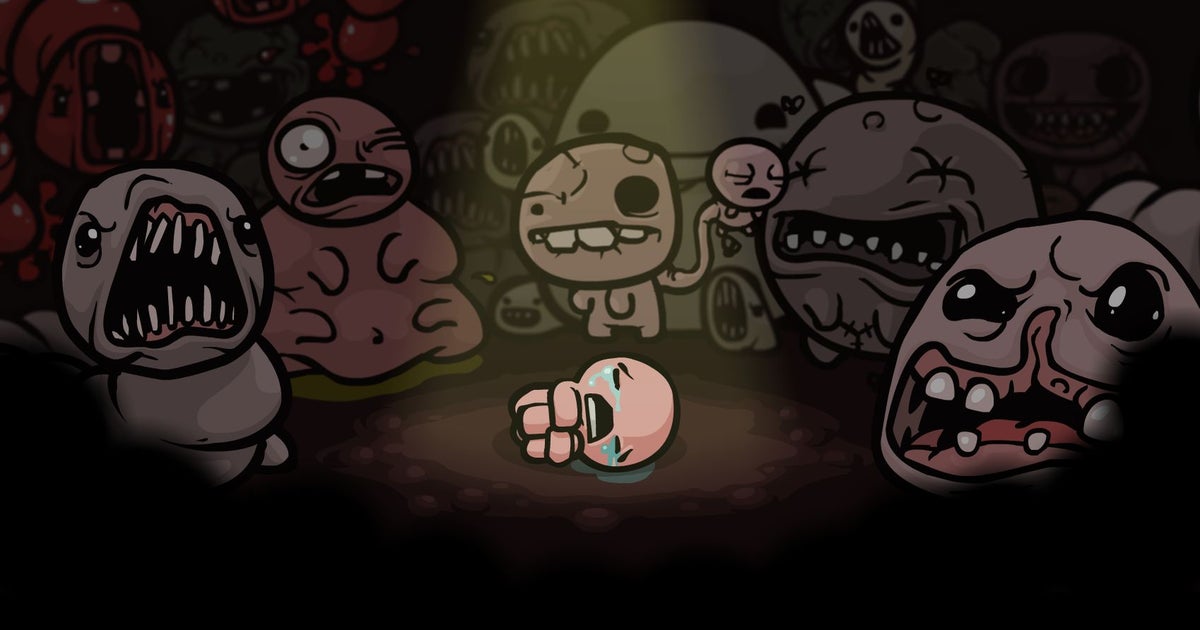
Then again, how many of these games are ‘genuinely’ Roguish? Roguelike and roguelite have become such broad concepts as to be functionally useless, describing everything from carpentry to casino machines. This was the case back in 2011, when Adam Smith (RPS in peace) marvelled over a peculiar new “Roguelike arcade game” called The Binding of Isaac; it was the case in 2016, when Alice O (RPS in peace) observed that the term roguelike is “so very bendy and too confusing to throw around without explanation”.
Personally, I define these games as follows: a “roguelike” adheres more closely to the original Rogue from 1980, featuring permadeath, equipment or character progression, procedurally generated environments, and semi-randomised challenges. A “roguelite” is a less harrowing variant that may not have an explicitly defined rogue character or dungeon - in particular, it may feature an over-arching system of unlocks that persist between runs, taking the sting out of restarts. Still, perhaps a more useful way of thinking about roguelikes and roguelites isn’t to tick off correspondences or take them back to their roots, but to look at the shapes they form within the greasy currents of platform economics and player habits.
deleted by creator
So would you consider Slay the Spire and Balatro to be roguelikes? I think they meet these four criteria.
deleted by creator
You ask an excellent question, one that I feel you already know the answer to. From my understanding, the term is unfortunately broadly overused for any procedurally generated game, to the point where the original meaning has been lost to time.
How many gamers today have even played or know what the original Rogue is?
Not enough. Omega, ADoM, Angband, Crawl, and Nethack are roguelikes. Nearly every game mentioned in this article is a roguelite.
Man I wish we had better terminology for this type of game. Roguelike and roguelite give the same energy as “Doom-clone” for every fps in the 90s. Later we called them FPS games. That genre has since been refined into tactical shooters, arcade shooters, milsim, etc. Meanwhile, we’re still stuck calling all games that have randomized runs “rogue-likes”. Being pedantic about the definition doesn’t make this situation better.
My bf calls all isometric action RPGs Diablo rip-offs.
I would agree with this definition. If the game does not visually resemble Rogue even a little at a glance, in what sense is it “like” Rogue
The popularity is because they are easy to pick up and put down. If I want to go back to an RPG that I haven’t touched on months I need to try to remember where I was going, what my build was doing, and how to deal with the things I was fighting. If I want to go back to FTL that I haven’t played on years I just start a new run anyways, and all my ship unlocks are there if I want them.
I would argue that a substantial reason for their popularity is also just that devs have fun when developing them.
With most other genres, you’ve seen the story a gazillion times, you’ve done each quest a thousand times etc… It just gets boring to test the game and it becomes really difficult to gauge whether it still is fun to someone who isn’t tired of it.
Meanwhile with roguelikes, the random generation means that each run is fresh and interesting. And if you’re not having fun on your trillionth run, that’s a real indicator that something needs to be added or improved.
What makes a game roguish?
-
Random level design
-
Death is permanent
-
Turn based gameplay
-
Grid based movement
Most modern roguelikes tend to only have the first two of these, tho. But those are the 4 main elements of the original game for which the genre derives its own, Rogue.
And Rogue-lites tend to make progression persist after death, at least partially. Such as with the unlockable weapons and things in Hades, while the boons and other abilities are pick ups you only have until death untill you pick them up again the next run.
-
Its sorta funny hearing the term for me because I can’t away from thinking about ascii dungeon crawls when I hear roguelike.
Removed by mod
Removed by mod