

2·
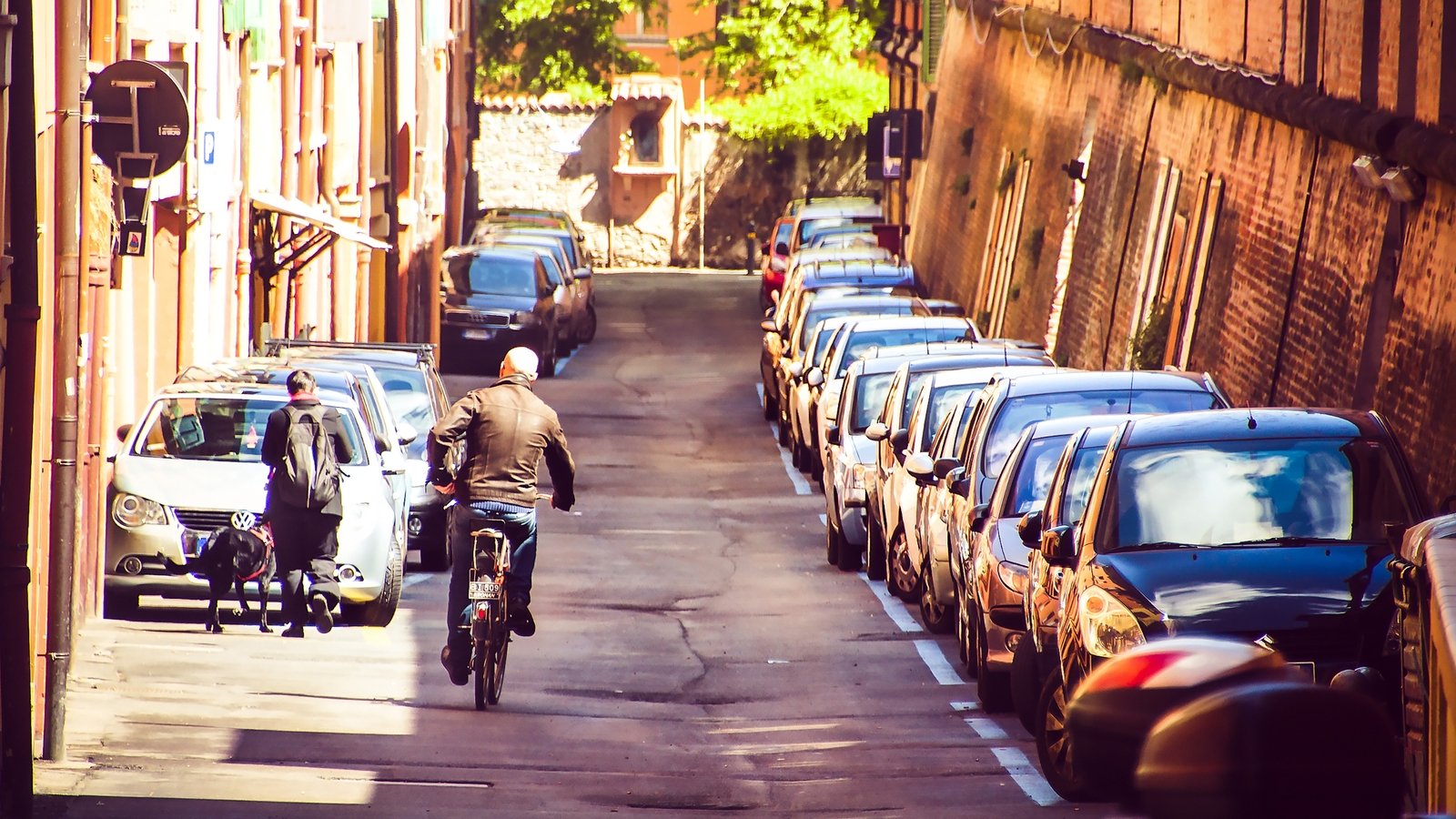
3 hours agoWenn Sie den Weg der Verdichtung einschlagen, sollte Ihre Priorität als Stadt auf dem öffentlichen Nahverkehr liegen, anstatt erneut der Autoinfrastruktur Vorrang einzuräumen
Wenn Sie den Weg der Verdichtung einschlagen, sollte Ihre Priorität als Stadt auf dem öffentlichen Nahverkehr liegen, anstatt erneut der Autoinfrastruktur Vorrang einzuräumen

It’s no surprise that federal public universities have received the highest marks; they are universally recognized as the best. But the evaluation of medical programs has also revealed that tuition fees can be inversely proportional to the quality of the education being offered. Medicine schools that scored the lowest (1 or 2 on a scale of 1-5) charge each student between $1,100 and $2,600 a month, according to a detailed analysis by Veja magazine. This is veritable fortune in a country where the minimum wage is $313 a month.
How can you charge so much compared to their minimum wage and still be so bad?
All I see are bits and bobs, I have no clue how any of that works lol. What are the parts that fail most often?

Damn, it looks really nice. Love the colors. Did you dye it yourself? What kind of dye is used on leather?
Did larger blocks ever become popular, since the BTC, BCH split?
At least on the Ethereum ecosystem, it has been increasing slowly until last year. See “Ethereum Mainnet: Historical TPS Capacity” [TPS = transactions per second] graph here: https://www.growthepie.com/quick-bites/ethereum-scaling
Since launch, Ethereum Mainnet has methodically improved efficiency and capacity without compromising decentralization or security. It went through several key upgrades, each contributing to incremental improvements in efficiency and capacity. You can read more about these on our ecosystem page. From 2015 to today, Ethereum scaled from ~0.71 TPS to 24.9 TPS, a 35.0x increase.
After years of steady gains, the pace is set to accelerate. The goal is to scale by ~3x per year with upcoming improvements. This takes today’s 24.9 TPS into the thousands before decade’s end.
There are many other upgrades yet to come. You can also find more details about them here: https://forkcast.org/
But the scaling approach also changed. We are no longer just looking for vertical scaling, like larger blocks, but also via horizontal scaling, which is usually called Ethereum Layer 2, which aims at millions of TPS. That first link also has more details in case you want to dive deeper.
Did the lightning payment network ever become popular?
As far as I am aware, it’s barely used
That won’t be the case for long, see here for some quick bites in case you are interested: https://www.growthepie.com/quick-bites/ethereum-scaling
Ethereum is on a clear path to scale. Over the next six years, Ethereum Mainnet throughput is expected to surge toward 10,000 transactions per second (TPS) - roughly 1 gigagas per second - while Layer 2s (L2) collectively push the ecosystem toward million-TPS capacity.
For example, one of the Ethereum L2 rollups mentioned, MegaEth, is expected to have mainnet launch date this month after a 35k TPS stress test.
How?
Ethereum’s strategy combines multiple approaches to sustainably increase capacity while preserving its core principles:
EIP-7938 (Dankrad Feist) - proposes a default, exponential gas-limit growth schedule where clients vote automatically to increase L1 capacity over time (subject to coordination and override). Read the spec here.
Lean Ethereum (Justin Drake) - a design philosophy to streamline consensus, data, and execution, leveraging DAS and real-time zkVMs for “beast mode” performance while staying verifiable. More.
More EIPs - parallel efforts improve execution, networking, and data availability. Slide overview [<- google docs alert].
The aim isn’t raw TPS alone - it’s sustainable, decentralized scale that remains easy to verify.
Insert 10000 xkcd. If you see it so often, just have a text ready to copy+paste anytime anyone says something about it

Cool stuff, I wonder how easy it is to retrofit those trucks and how that adapter works. Does anyone have any idea?

Is it really positive considering all the additional costs on healthcare and clean up?

Which talks are y’all looking forward to?

I can’t see content from piracy@dbzero or whatever now
Does that include comments?
If he’s going to have to install batteries, would it make sense to shove all that permitting money into more batteries and go completely off-grid instead?
At least around here, you can just tell the utility company to fuck off if you are off-grid
You usually need to get a permit beforehand, except emergency vehicles. These areas are large enough to accommodate them, but the spaces are planned for people, not just cars. If by lorry you mean an 18 wheeler, I don’t think it can maneuver there, it’s usually smaller trucks being used.
For Merwede specifically, ebikes and small electric vehicles are allowed (up to 1,3m wide). If you need to build/remodel/move in or out, you request an exemption with the council. You won’t be able to park anywhere, there will be designated areas for it close to your destination
Having that in mind, tradespeople don’t need huge pick up trucks, you will likely see them using a van or cargo bikes like this one:


We don’t even need to limit ourselves to those two, to be honest. Agrivoltaics is quite flexible and can be used in many different crops and forms (above crops, between crops, etc)
What was in that Mordor terrain?
TIL you could also use aluminum powder:
Foamed concrete differentiates from (a) gas or aerated concrete, where the bubbles are chemically formed through the reaction of aluminum powder with calcium hydro oxide and other alkalies released by cement hydration and (b) air entrained concrete, which has a much lower volume of entrained air is used in concrete for durability.
For those that would like to test that recipe as well, I found it here from that video:
Lightweight aerated concrete dry mix design

Basic recipe for non autoclaved lightweight aerated concrete (aircrete) with 600 kg/m3 density:

To make non autoclaved lightweight aerated concrete you need:

- Ordinary Portland Cement

- Limestone powder (particles up to 0.05 mm)

- Aluminum powder with water coverage 15 000 cm²/g and more.

Dry mix formula:

50% cement (by weight) + 50% limestone powder (by weight). I mean for 1 kg of dry mix you need 500 g cement and 500 g limestone powder

Mixture formula for 600 kg/m³ density:

1 kg of dry mix 0.65 liters of water 1 g of aluminum powder for 100 kg of dry mix you will need 65 liters of water and 100 g of aluminum powder

How to mix it:

1. Add water in the bucket

2. Add dry mix in the water and mix it for a couple of minutes

3. Add aluminum powder and mix it 1 - 2 minutes.

4. Pour it in the mold
Did anyone try to use aircrete as plaster instead? I wonder if it might be viable too

-football Marseille - Lens
-football FC Union Berlin - Borussia Dortmund
-football Juventus - Napoli



















Based. Hopefully we start moving towards long term thinking instead of only short term profits