
Hanrahan
Betwixed and between
- 473 Posts
- 1.85K Comments



 62·2 days ago
If that’s it, Libre Office.


 3·4 days ago
Has already happened in Australia, the enshitifcation accelerates
 2·6 days ago
Tourism seems obvious but that cant happen until infrastructure is addressed. It can be difficult for locals, its a nightmare for tourists. Manila can’t be much until traffic issies are addressed, so much lost prodictivity for locals, let along the entire city is often a barely moving parking lot.
None of that can be adressed until corruption is dealt with :).
 4·6 days ago
temporarily tank and in turn make it very difficult of the US to issue new ones, which they depend on to finance their huge deficit.
Which is irrelevant, just QE and the Fed buys new debt off Treasury, also, just issue it with a 0% coupon rate, so no interest… this is exactly what Japan has done with the Yen for decades. Then only issue after that is inflation.
The current US debt can’t be paid back, it’s too big, holding more debt in that context is irrelevant.
 6·6 days ago
I saw an IEA (i think it was ) estimate that China reduced oil consumption by 1.6 million barrels a day already becase of their EV rollout (cars and buses).
For Australians (alas, big Teska supporters) and much of the world they are all made in China anyway.
 39·6 days ago
Most -ism’s are the problem, every hericarical civilization throughout all of sapien time has collapsed, destroyed the local enviorment etc. Inequality is the issue.
 22·6 days ago
It’s not great, it was a paid alternative to some adobe apps. I used it on Windows Canava owns it now and further enshitifcation will ensue.
I now use Inkscape, which is great.
 2·7 days ago
Yeah but he also said he can grab 'em by the pussy and shoot people in Times Square etc why they ignore that ?
It’s like Christians i guess, they ignore the bits they find inconvenient like its ok to own slaves as long as they are purchasesd from neighbouring countries and stoning people to death for working on the Sabbath.
 2·7 days ago
I honestly believe the answer to that is capitalism.
I don’t agree, all hierarchical societies collapse from within; Egypt, Rome, Khmer, Inca, Greek, Roman, British, USSR, Babylonian and on amd on and we’re witnessing the collapse of the USA
The issue isnt capatislim it’s inequality. If you have inequality you will fail, every… single … time. The ONLY societies who haven’t are equal ones. Eg the Australian Aboriginal societies lasted over 60,000 years, the African Bushman lasted 150,000 years. Their collapse only comes about from outside force changing how they lived If your metric is time, resilience and a livable biospbere, then these are breathtakingly successful societies.
https://aeon.co/essays/why-inequality-bothers-people-more-than-poverty
Most remarkably, his research revealed that the Ju/’hoansi managed this on the basis of little more than 15 hours’ work per week. On the strength of this finding, the anthropologist Marshall Sahlins in Stone Age Economics (1972) renamed hunter-gatherers ‘the original affluent society’.
This research also revealed that the Ju/’hoansi were able to make a good living from a sparse environment because they cared little for private property and, above all, were ‘fiercely egalitarian’, as Lee put it. It showed that the Ju/’hoansi had no formalised leadership institutions, no formal hierarchies; men and women enjoyed equal decision-making powers; children played largely noncompetitive games in mixed age groups; and the elderly, while treated with great affection, were not afforded any special status or privileges. This research also demonstrated how the Ju/’hoansi’s ‘fierce egalitarianism’ underwrote their affluence. For it was their egalitarianism that ensured that no-one bothered accumulating wealth and simultaneously enabled limited resources to flow organically through communities,
There are no solutions that don’t involve removal of inequality. Everything else is just kicking the can down the road.
So if Trump is the symptom, then what is the disease?
I’m not sure I understand your position, some self reflection about glass houses and throwing stones and fix Denmark ?
Denmark is big on racism, cultural preservation (a dog whistle for racial purity) , they don’t like brown people asylum seekers or refugees , big on protecting its borders blah blah. In many ways the nation (perhaps not yiu on particular) is very similar to the current US conservative view, Denmark seems upset that their fascist adjacent “comrade” is now turning on them
This seems more like a Leopards eatiing their face situation?
 3·7 days ago
About tree fiddy
As a user, It would be nice to be able to consolidate.
I think the most valuable thing we can do for the fediverse is to contibute by posting in communities we care about
I saw this same thought posted about 2 weeks ago and it made me realise I posted lfew replies and scrolled a lot. That person suggested if people see a post with zero responses they likely scroll past (myslef included) but even if the post has 2 or 3 responses, people will be more likely to perhaps engage
I now respond more, even if like this response, it’s just a +1 type response.
 2·7 days ago
Well, Australia and New Zealand are fucked
 9·7 days ago
Nahh, the dissenters are still using X.

 6·7 days ago
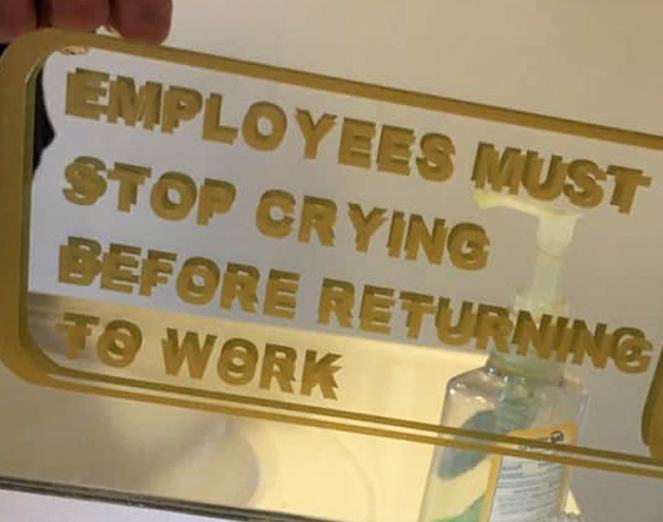
So, like he Armed Forces.?
 1·7 days ago
LSD in their food?








It’s always disappointing to me to see this touted as a poative, profligate use of energy is the problem, regarldess of the source.
Replacing all fossil fuels with renewabkes and not severely curtialing enrgy uae is the path to destruction.
Clean energy might help deal with emissions, but it does nothing to reverse deforestation, overfishing, soil depletion and mass extinction. A growth-obsessed economy powered by clean energy will still tip us into ecological disaster.” - Jason Hickel
Meahwile.global emisisona keep increasing and ours are mostly static or rising. Anything to avoid riding a bicyle and not flying I guess
https://mass.streetsblog.org/2022/04/22/international-climate-report-demands-systemic-changes-to-transportation-and-urban-planning/
And a Climate Scientist
https://phys.org/news/2022-11-expert-comment-future-electric-fast.html