

151·
2 days agoFrom Sal, it’s less that they can’t find them then they are creating a toll booth chokepoint.
https://www.youtube.com/watch?v=E9rslGBcEZQ
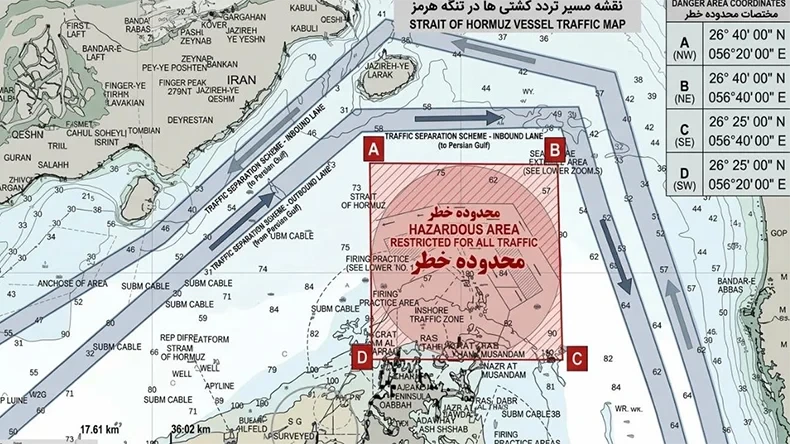
This is a huge freedom of navigation issue as well as incursions into Oman territorial waters.
From Sal, it’s less that they can’t find them then they are creating a toll booth chokepoint.
https://www.youtube.com/watch?v=E9rslGBcEZQ
This is a huge freedom of navigation issue as well as incursions into Oman territorial waters.

Beyond cutting prices, PepsiCo is also rethinking its overall game plan to get sales back on track. In December 2025, the company said it would shrink its product lineup by about 20 percent, focusing more on its biggest, best-selling brands while cutting down on less popular items. At the same time, it’s investing more in promotions and tweaking package sizes to make its snacks feel like a better deal for shoppers.
Zscaler ThreatLabz researchers recently discovered a highly deceptive campaign leveraging the leak as a social engineering lure to target developers seeking access to the source code.
In this newly discovered campaign, attackers have established malicious GitHub repositories that masquerade as the authentic leaked repository.
One prominent page, published by a threat actor named idbzoomh, currently ranks near the top of search engine results for users attempting to find the files.
The repository promises an unlocked version of the enterprise software featuring no usage limits. Instead of legitimate code, the provided zip archive contains a Rust-based dropper executable.
Upon execution, this dropper deploys the Vidar information stealer to siphon sensitive credentials and GhostSocks to proxy network traffic.

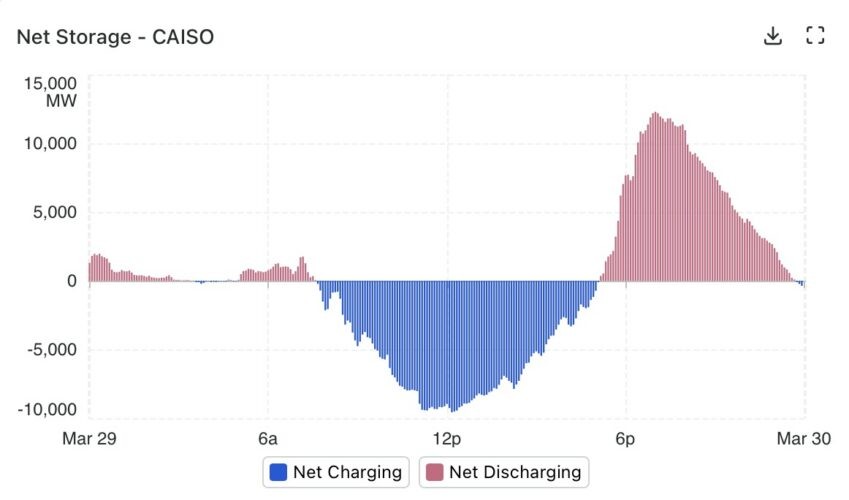
This is another view on what happened on Sunday in California. Batteries charged heavily throughout the day, soaking up the excess solar, approaching charging rates of 10 GW at times. In the evening, most of the output was centred on the early evening peak, but batteries supplied a significant share throughout the evening.
The biggest loser in this transition has been gas, with the share of battery storage staying at high levels throughout the evening peak. On Sunday, it stayed above 20 per cent of grid demand for almost four hours.
As Fulghum noted: “To put that kind of output during peak demand hours into perspective, it’s equivalent to the output from:
- 15-20 combined-cycle gas plants
- 6 Hoover dams
- More than the all-time peak demand of Portugal or Greece.”

Nice eval and analysis. I am finding it more and more obnoxious that lemmy doesn’t seem to like true debate. Take the down votes as a good sign that you struck a possible cord of reality.

It does. Missiles are $30k or £100k+
The Rocky Mountain Biological Laboratory is in the former ghost town of Gothic, abandoned after the closure of its silver mines. Over winter, the landscape lies quietly under a bed of snow. In early spring, the only way for researchers to get to experimental sites – at an altitude of 10,000ft – is by skiing across country.
Electric infrared radiators warmed five experimental plots of 30 sq metres year-round. Head-height heaters were on day and night over a patch of meadow, keeping it 2C above normal temperatures with an annual electricity bill of $6,000 (£4,450). They warmed the top six inches of soil. Animals could come and graze and the natural system was preserved as much as possible.
Over 29 years, researchers found that shrubs increased by 150% in warmed plots compared with those without warming. The surface of the soil was dried by up to 20%, and shallow-rooted plants became stressed. Some wildflowers went extinct in heated plots. “It’s a sign of things to come,” says lead researcher Lara Souza from the University of Oklahoma.
Scientists also noted big changes in the invisible world of soil fungi and microbes. Shrubs and sage brush don’t rely on fungi in the same way as grasses. They found a decline in fungi that help plants acquire nutrients, and an increase in fungi that decompose organic matter. “This highlights that when you have a big change above ground, you’ve likely got a big change below ground,” says Souza. “Turning back is very unlikely.”
As The Soup, I bequeath the honor of my crest! Slurp thy in my name!
Might have been performative in part but net migration was negative for the first time in 50 years which will have a long term negative impact on our economy in many ways given the demographic bubble we are in as well as general brain drain tend we are seeing.

White House spokesperson Taylor Rogers said Friday night that Trump “reversed course on Joe Biden’s costly green energy agenda that gave preferential treatment to intermittent, unreliable energy sources and instead is aggressively unleashing reliable and affordable energy sources to lower energy bills, improve our grid stability and protect our national security.” Rogers added in a statement to AP that the administration “looks forward to ultimate victory on this issue.”
Orsted said that at a time of growing energy demand, Revolution Wind will provide price certainty and stability, citing a preliminary analysis by the state of Connecticut that estimates it will lower wholesale energy costs by about $500 million per year by 2028.
…
Orsted began construction in 2024 about 15 miles (24 kilometers) south of the Rhode Island coast. The wind farm has 65 of the 11-megawatt Siemens Gamesa turbines, and more than 1,000 people have been working on it.
That’s all before we’ve even considered ASML’s accumulated know-how as, in Yangyuan’s words, “merely the integrator.” The company’s EUV dominance rests on a supply chain of more than 5,000 subcontractors, along with decades of high-volume manufacturing data. No amount of reverse engineering can quickly replicate that. While it’s true that Chinese firms have made real gains in adjacent equipment categories — Naura, for example, is one of the world’s top ten semi equipment vendors by revenue — lithography remains well out of reach.
It took ASML decades to do this, and while I won’t discount a genius level breakthrough, I doubt stealing and reverse engineering is going to shortcut the lead that much. I wouldn’t be surprised if they keep on the track they are that by 2035 they may finally be able to over take ASML though.

When was the last time you were a student?
Also, there is a reason you want students to use your product before hit the work place, as they bring the interest in the product.

This is a great question and one that is worth diving into a bit, but not necessarily by me. There are a plethora of answers here with some insightful and some less so backgrounds. I suggest that you dig into some outside sources and potentially you can work through the complexity of the answer as history often is.
I’m sure others have some great references as well, but given this crowd I’d suggest some youtube videos. I also suggest some recently written long form articles in foreign affairs which is always good for understanding context, as well as a few books.
RealLifeLore:
Related:
Also Foreign Affairs has some good long form pieces:
Book wise I recommend:
Worlds Apart: A Documentary History of US-Iranian Relations, 1978–2018 by Malcolm Byrne and Kian Byrne offers a meticulously curated collection of declassified documents tracing pivotal moments in bilateral tensions, including the Iranian Revolution and nuclear negotiations
Axis of Empire: A History of Iran-US Relations by Afshin Matin-Asgari examines America’s Cold War hegemony, the shah’s regime, the 1979 Revolution, and Trump-era escalations, including the 2025 US-Israel attempt at regime change in Tehran
Iran’s Perilous Pursuit of Nuclear Weapons by David Albright uses Mossad-seized Iranian documents to detail clandestine weapons efforts, assassinations of scientists, and cyberwarfare like Stuxnet
I empathize with your off-topic comments, but I think it has much to do with the context of information today. Trump himself is trying to drive any comments of Epstein away by distraction and events. This is one paper on the topic. So many people are throwing the references in as an eye to defiance, anger, frustration, and as part of a trend. If the idiocy in charge wants to distract us, then more than ever we need to stay focused on why he wants to distract us.
That being said, it does have unintended consequences and is not necessarily the best way to handle this. However this new generation hasn’t really had a civil rights, suffrage, British tea party, or even just Arab Spring event to use as a baseline to make change in this entirely digital world now. People are still trying to figure out how to push, have a phone that causes attention distraction, live pay check to pay check, etc. Which is to say organization and protesting is still figuring itself out, so you get ‘release the files’ as a call to arms everywhere.
Going to guess this is a Windows question and you are thinking GUI. In that case I’d suggest the older https://checksumcompare.sanktuaire.com/downloads-en as it’ll do what you ask for visually.
There are a plethora of ways to do this in Linux on the CLI, TUI, and GUI, which is what most answers will likely lean towards given this community. If your apt toward that then start with https://unix.stackexchange.com/questions/330933/diffing-two-directories-recursively-based-on-checksums

Baby hatches in the United States are generally called “newborn safety devices” or “newborn safety incubators.” The first known installation of baby hatches in the United States was in Arizona in approximately 2001. Known as “drawers,” the devices were installed primarily in Maricopa County, where six drawers exist at local hospitals as of May 2023. Beginning in 2016, the Indiana-based nonprofit corporation Safe Haven Baby Boxes began installing its own branded “Safe Haven Baby Boxes” in locations throughout Indiana, the first in 2016. As of April 2023, there were 153 baby hatches installed and in use in eleven states, primarily Indiana, which has nearly 100 hatches in operation. Other states with baby hatches include Ohio, Arkansas, New Mexico, Kentucky, and Florida. As of May 2023, eight additional states have enacted laws authorizing installation of baby hatches, though none have been installed.
This article is just wow!

I think we’re aligned on the core issue but with nuanced perspectives. Regulatory capture is indeed the established academic term for the phenomenon you describe, precisely capturing how agencies meant to protect public interest end up advancing industry priorities through mechanisms like the revolving doorbetween Boeing and Congress.
Where I’d argue the Starliner narrative: While Boeing’s participation provided political cover for Commercial Crew legislation, SpaceX’s 2010 Falcon 9 debut and subsequent rapid repeatability fundamentally reset industry expectations. The success of fixed-price cargo contracts demonstrated reusable rockets and rapid iteration were possible, proving cost-plus models weren’t inevitable. This technological inflection point–not Boeing’s involvement–created the political space for NASA to demand accountability in human spaceflight.
Boeing’s Starliner struggles directly stem from its post-1997 merger culture shift, where McDonnell Douglas’ profit-focused management supplanted engineering excellence. This same culture produced both the 737 MAX flaws and Starliner’s valve failures, showing how regulatory capture enabled systemic safety failures when oversight bodies delegated excessive authority to Boeing.
The breakthrough came not from Boeing’s inclusion but from SpaceX proving fixed-price development could work, breaking the cost-plus mentality that had entrenched inefficiency for decades. Had Commercial Crew relied solely on legacy contractors, the same capture cycle would likely have persisted. SpaceX’s existence changed the incentive structure, not Boeing’s participation
All valid points, and yes SpaceX is a demonstration of how privatization can be more innovative. The challenge is that the counterpoint of Boeing culture change causing things like the Starliner is about as valid when regulatory capture happens.
I’m not saying nationalizing companies would help, but a government with good oversight (which is more and more of a question under Trump) could also help.

Ah, https://github.com/IsThisMeta/zagreus interesting. Looks like it’s in a similar state as the OP, but worth tracking.






I was hoping someone else would catch that. Fuck making a real value, just make it seem like it.
Asshats. May their stock go down like the Titanic and their management find mud pits.