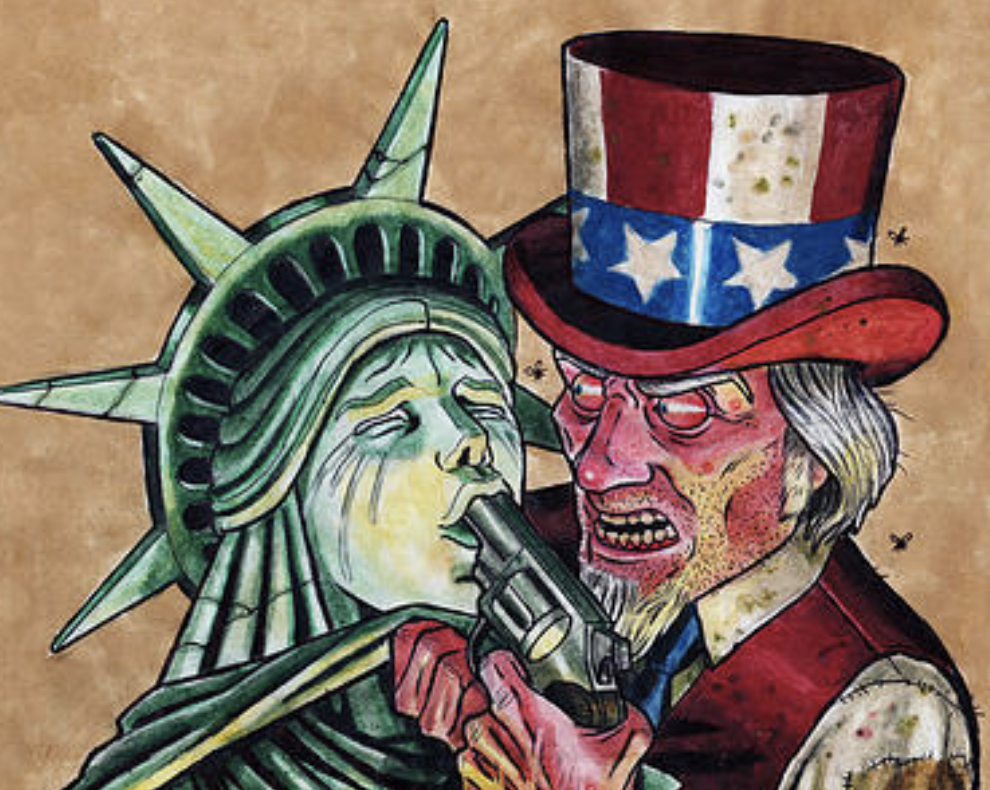
AFAIK he was always a bit of an asshole. The long standing hypothesis is his stroke in 2022 changed his personality. It’s disappointing obviously, and he needs strong primary opponents. We need better Democrats.
Klox
- 1 Post
- 97 Comments
Joined 3 years ago
Cake day: June 16th, 2023
You are not logged in. If you use a Fediverse account that is able to follow users, you can follow this user.

 1·20 hours ago
Ok, here are your requirements:
-
A ticket exchange that provides permission less access and trust less verification of ticket authenticity and ownership (we should be free to use independent exchange services).
-
Tickets must be transferable between parties without intermediary controlling and approving exchanges (or you’re just the new middleman).
-
Rules around issuing tickets, resales, and revocation must be enforceable transparently.
Good luck friend. LMK what you come up with. I think what might be more productive to the conversation is if you state which of these requirements is not important (and why it is not important) because I can guarantee you can’t make a system that meets these without a blockchain-esque system.
FWIW, if you don’t understand why blockchain technology is unique, in that it can solve problems NOT POSSIBLE with other technology, then you haven’t studied it enough. There are tradeoffs of course when designing systems, including efficiency and cost, etc. which makes blockchain irrelevant for 99% of system designs. But that doesn’t mean the technology is not unique.
-
What is your background in IT? I briefly explained that a database is not “just” a database when it comes to building a marketplace/exchange, there is a ton of infrastructure and code. The problem is that it is all proprietary and not following any kind of open standard. In comparison, the database schema for “checking in” to an event is dead simple: (ticket id, checked in). You could literally print off paper and do it analog if you wanted, it’s that simple. If you tell me your background maybe I can make a more specific analogy, but the infrastructure + code + database schema for a marketplace is like the difference between a golf cart and an F1 car. Or a grocery checklist and a novel. These are many orders of magnitude different.
Why bother? Because it sucks paying fees. Literally billions of dollars extracted by middleware companies. Every stupid ass website is charging fees for everything because it’s all centralized crap. My wife wanted to go to a popular musical, and for 5 tickets I’m paying literally an extra ticket worth in “convenience fees”. I paid for a couple more tickets for my siblings to join, and they ended up not being able to make it day of. I posted them on StubHub and one sold for less than value (and more fees!), and the other didn’t.
The “general problem” of ticketing infrastructure - generating, marketplace, exchanging - has been solved with an NFT open standard at a fraction of the cost in comparison to what these parasitic companies are extracting. Why bother? Because I’m tired of our fees culture.
Ack. I’m not going to pretend like I’ve thought up the whole business plan, but it’s well known the centralized ticket agencies have huge markups. Ticketmaster’s ticketing business is something like $3B in revenue with $1B in profit.
I’m sure there’s still a need venue services, I didn’t mean to suggest the venue could or want to be entirely in-house. Maybe I’m minimizing that part of their business, but if tickets are NFTs it’s so much easier to avoid vendor lock-in for expensive scanners and day-of services.
A database indexing scanned tickets is cheap if you don’t want to burn/transfer the NFT at the door (depends on the network costs too). But again maybe I’m trivializing what Ticketmaster does (IMO I don’t think I am).
 19·2 days ago
I recently looked up if there were any house representatives that voted on the BJ impeachment. Amazingly, I think there were still 4 to 5. A couple GOP and a couple Democrats. They all voted for impeaching Trump, but the GOP Senate protected Trump yet again.
Never vote Republican, ever!
You aren’t seeing a difference between what I described and a SQL database? I work in IT and I’m not sure of your background. First, nobody opens a SQL database to the public. There’s a ton of code surrounding every database. How do you think a SQL database ensures only “one owner” of a ticket? It requires identity tracking and management as the tip of the iceberg. And how do you think a SQL database allows people to exchange ownership of the ticket? It requires creating uniquely identified tokens, and code to bridge across systems and exchange the UIDs around. On and on. Almost no venues are doing this in-house, I am not sure what you mean by that.
You’re not thinking of any complicated scenarios if you think ticket sales can be “just a SQL database”. Ticketmaster offers a ton of management around tickets specifically because they are not using any generalized exchange platform (e.g. an NFT standard). With NFTs the bar is lowered for venues to manage it themselves. Posting NFTs to a NFT exchange is dead simple. You don’t need an IT department, hosting costs, staff, call center, etc. to support it. You need a couple of point of sale devices for verification at the door (something they generally already need).
And I certainly wouldn’t trust each venue to securely implement it themselves.
I feel like you’re putting out mixed messages or I’m not understanding your point. You wouldn’t trust venues to use NFTs successfully because they need to do something specific? Or you are referring to in-house development not being done securely? My overall point is, NFT exchange becomes a standard around which venues can operate independently with significantly less overhead, is simpler for the consumer, and cuts out predatory centralized ticket services.
Anyways, cheers. I think there’s a lot of other interesting cases for NFTs but people tend to focus just on jpeg thumbnails.
It’s not that different from how it currently works, but the difference is the platform is distributed and not centralized. NFTs are nonfungible, and the contract process guarantees the NFT can’t be owned by multiple wallets. There can be only “one”.
A venue generates 5000 NFTs (could be individual seats, could be general ticket) and puts them on an NFT marketplace (e.g. OpenSea) for the ticket price (e.g. $100) + 1% (OpenSea will also charge a fee). I buy one of those tickets for $101. I go to the venue. The ticket scanner sends a challenge to my phone, and my phone generates a signature that proves I have the ticket, and I go in.
If I can’t go for whatever reason I can’t go, I can post the NFT to the same or a different marketplace. Note that NFTs don’t necessarily prevent ticket scalping, however because it’s part of a digital contract you can also code an upper limit for the resale of the NFT which would definitely hurt scalpers. But just eliminating the vendor lock-in of the ticket exchange would cut fees between 95 and 99%.
Logistically, what if I lose my phone, and can’t verify the challenge proving I have the NFT at the gate (or whatever similar scenario). The same system intended to prevent fraud also means the system is not flexible for human error. But maybe that’s worth it for everyone to not have to pay 15-30% fees by centralized ticket management systems.
“Digital ticket platform” is literally the poster boy of middle-man grift. Are you not familiar with Ticketmaster? Even smaller platforms are taking 15-30% fees for very little value-add. They “exist” to reduce the operating expenses of venues, but if there was wider infrastructure of NFTs these venues wouldn’t need to contract it out.
NFTs as a mechanism for exchanging and authenticating contracts is pretty revolutionary. But the only thing that reached public awareness were the dumb NFTs of a single image. The closest breakout was probably the effort for ticket sales and club memberships – your “ticket” is the NFT itself, and you can move it around (sell, exchange) as you want before the event. There are still human-errors/logistical problems but in the end whomever has the NFT gets the seat. For club memberships, you were a member as long as you held the NFT. If you wanted out, you could sell it to someone else that wanted to join the club.
I could imagine all kinds of interesting use cases. But everything is just dumb about it now. Oh well.
 3·4 days ago
Because one of their legs is longer.
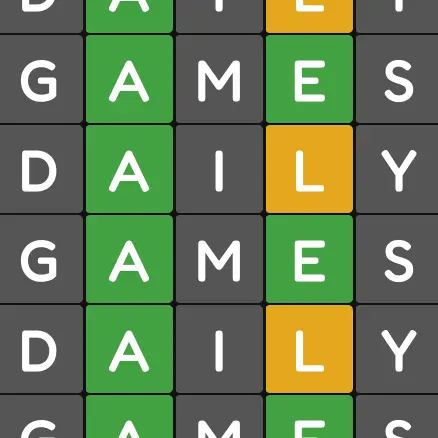
Wordle 1,724 6/6

🟨⬛⬛⬛⬛
⬛⬛🟨🟨🟨
🟨⬛⬛⬛🟩
⬛🟩⬛🟨🟩
⬛🟩🟩🟩🟩
🟩🟩🟩🟩🟩
 1242·5 days ago
Outlawing sociology is just outlawing statistics. These people need to be delt with, and quickly. Remove them from every position of authority asap.
 4·6 days ago
I’m redoing everything I have from scratch. This week I have FreeIPA set up from OpenTofu + Ansible configs, and enrolls most of my other servers against FreeIPA. I am still migrating TrueNAS to use FreeIPA’s Kerberos Realm for auth, and I need to chown a lot of files for the new UIDs and GIDs homed in FreeIPA. After that, I’m setting up FreeRadius for auth to switches, APs, and Wifi. And then after that, I’m back to overhauling my k8s stack. I have Talos VMs running but didn’t finish patching in Cilium. And after the real fun begins.
 16·8 days ago
I can’t write a whole lot right now but your question is probably a bit too broad. Threat model needs to include the scope of what you’re protecting. For example, if you have some expensive heirloom watch, you might analyze how the threat changes if you’re home or wearing it out. Maybe lock your doors to your house is the first step. Second is keep it in a safe. Third is keep it in a larger safe bolted to the ground in a hidden area and make sure it can survive a fire and flood. Fourth might be buying an insurance policy in case something does happen. The model is continually evaluating risks vs mitigations to those risks.
From a digital perspective, you might consider how you get access to websites across the internet. Your email is a huge single point of failure. What if you lose access to your email? Because you forgot your password, or you were social engineered to click a bad link, or you shared the same password with another website that was compromised. Part of the challenge is having experienced or learned all the types of risks. And then the second half is understanding the mitigation options. For email, using a unique password and enabling 2-factor authentication (that is not SMS) mitigates a lot of possible threats, but not all.
You can learn quite a bit by just being familiar with types of scams and reading stories.
Cheers
Wordle 1,719 5/6

⬛⬛⬛⬛⬛
⬛⬛⬛⬛🟩
🟨🟨⬛⬛🟩
⬛🟩🟩🟩🟩
🟩🟩🟩🟩🟩
 30·10 days ago
Oxymoron? No, just morons.
Operation Epstein Bury

 14·12 days ago
I was Bernardo for a few weeks until we got to talking about “things you like”. Well, I said “yo soy pollo”. Class errupted and I was left with dumbface not understanding why it was funny for awhile. And then I became Pollo for the rest of the year.

Requirement 3 was just nice to haves to make a better culture around ticketing to fight scalpers and related problems. The first two are mostly the meat of the ticketing ecosystem.
That’s not the ultimate trust, and whether or not I trust them has no bearing on purchasing tickets. The point is, people can sell me a fake ticket and I won’t really know until I get to the venue. Providers committing fraud is pretty rare.
You don’t know what you’re talking about then. You can absolutely prove the vender issued the NFT. And you can absolutely prove you own the NFT. And you can absolutely transfer ownership of the NFT in a provable way. I don’t know what other argument to make if you just believe incorrect facts.
I really don’t understand the desire for you to want to pay 15 to 30% fees to go to a venue. Is it hard for you to imagine a world where that is not necessary?
That’s requirement 2. I should be free to hand my ticket to someone else, digitally. Now we both need to have some custom software talking to your database, and we are in integration hell trying to get ownership transferred in a secure way. Now we’re running a business equivalent to StubHub with thousands of staff trying to have clients upload their tickets to this database in a verifiable way, for no purpose other than you don’t want to admit blockchains solve some interesting problems.
Because you want to know you own the ticket. Can you imagine flying to a town, getting to a venue, and holding a fake ticket? Oof…
I don’t think we’re really having a debate anymore. You can print your physical tickets from Ticketmaster. It doesn’t remove their 30% fee. It doesn’t make ticketing more convenient. Why invent solutions to problems we aren’t talking about?
How does a retrievable Merkletree from a database meet any of the requirements I asked for? What does that even mean, to throw in a Merkle tree? Are you trying to convince me you can prevent double-writes to the database? What is this API you are imagining, where I can give ownership of a ticket to someone else? And now we’ve got thousands of venues with their own schemas. What are you even arguing here? It just sounds like you want to hate blockchains, heh.
The third requirement was to cover some of this. Vendor canceling tickets and other maintenance actions. Courts are involved all the time with existing businesses, so I am not sure why “courts” is a counterpoint to an NFT backed ticket ecosystem. If anything, it makes it stupidly clear to the courts who “owns” the ticket. People can be phished right now, so I am not sure how that’s a counter-point to any of the requirements I mentioned. If the customer can prove they were phished, it is extremely easy to revoke the NFT and issue a new one.
Anyways, I think we’ve run this course. Ive enjoyed chatting. My goal was just to raise some awareness since I only see poorly thought out critiques of NFTs. There are some good reasons to not want an NFT system, but there are also some unique benefits.
Cheers