

5·
4 hours agoInvestment money is not as plentiful as it was several years ago. I’ve heard it in several interviews with developers or devs themselves. (Game Maker’s Notebook, Mike and Rami are Still Here, and a few devs on YouTube come to mind.)
Hobbyist gamedev, moderator of /c/GameDev, TV news producer/journalist by trade
Investment money is not as plentiful as it was several years ago. I’ve heard it in several interviews with developers or devs themselves. (Game Maker’s Notebook, Mike and Rami are Still Here, and a few devs on YouTube come to mind.)
I may be wrong as I don’t really play the genre, but I think Marvel Rivals is kinda the king of the hero shooter genre right now.
But that said I generally do agree that “another live service game that doesn’t clear a very high bar” is the issue. The recent success of ARC Raiders despite social media telling me people “don’t want extraction shooters and to give it up” really drives home the point of “if it’s good enough… It’ll probably do well.”
(And I realize those two are third person games, so not “first person shooters”, but I’d still consider them competition for them.)
And with the economy the way it is, yeah, money matters a lot more. People are more likely to dedicate their time to one big game, and sometimes a couple of smaller ones. It makes things an “all or nothing” proposition. And most games don’t look like “all”.

AI in games (using code for entities to make non-player decisions) is about being good enough, cheap enough. It’s just like how games determine their physics. The existence of large scale “black box” AI like OpenAI does not reflect what’s good or cheap. It can’t play chess. You think it’s going to understand The Sims and make reasonable choices in that system?
They’ve already created well tuned system to give your Sims in obtaining their needs. It leads to you having to manage the chaos, and that’s what the fun is. To better hone that is to have the AI play the game for you. And even that, if efficiency of play is the goal, is better done by TASbot and machine learning.
That generic black box style of AI like popular LLMS is like creating a hammer. Now everyone is treating every problem like nails. AI decisions making in games is like washing windows; don’t use a hammer.
The problem is that “AI” is a poorly defined, very vague, and widely used term. Most people here have assumed you meant LLMs because everyone pitches those as ways to solve everything. “Oh, irer up an agent, give it instructions, and let it make requests that are context dependent”. Then, like everyone says here, that usually turns into people testing boundaries and breaking your game. So that makes it both “not good enough” and “not cheap enough”.
Now, look at AI with the term “machine learning” in mind and it’s different. Games like ARC Raiders use machine learning to teach NPCs movement behavior, and to train AI voices like Siri so they can’t add things without further paying people. They think that up-front investment is worthwhile. But those are both far cries from “uploading it to Claude or ChatGPT and see what happens”. Especially when you would have to teach that black box AI your system anyway, for it to use it. And you’re already doing that with current “good enough, cheap enough” bespoke methods, for much cheaper, and they’re good enough.

I love a great championship match on weekly TV.
I started the first one and really liked the little walking I did in the first hour and a half, but I just tapped out after that because of the ratio of cutscene to game. … I should play them.

I get it and was very skeptical at the time… But soon after I began to believe they’d stick around, and my annoyance at installing through multiple discs (and also putting discs in the tray to play a game) won out.
I bought and moved like 1 in late 2013 when it spiked just to play with it and see how it worked, out of curiosity about the tech. (And soon after, mined Dogecoin on Reddit when it started, and we all began tipping like crazy because it was fun and funny.) I made a few bucks off the BTC and kinda regretted not holding it longer. Then cut to a decade later… Sheesh. I may be more sour on the tech now, but damn I’m not so crazy as to not regret selling it.
I’ve often wondered why some more advanced games like Elder Scrolls don’t keep track of dramatic actions in some way and offer them up to you when you leave the game for a while. A “previously…” kind of element. Big budget action games too, like from Rockstar.
Obviously they just don’t think it’s worth the work, but I do wonder if it would affect completion rates.
You’re completely right of course, but I’ll say it bugs me too at times. I was always able to forgive it but as we got more advanced visually it bugged me more. Then finally in Oblivion it was too much for me. I still love and respect the game, but it actively bugs me there are portals around the world that are just waiting for me to decide I want to fight. I know it’s dumb, but it is what it is.

I can easily imagine tiny towns, neighborhoods (and even apartments) using a Mastodon server to create a community based social media. Now, whether people would WANT to use that, and if it would just turn into NextDoor, are separate issues.

He’s been talking about it on Mastodon for quite a while now. It’s a shame.
/edit: It wasn’t the game he talked about on Masto; that game finished/released! My dumb. I thought it was continued development.
Downwell and Holedown are both fantastic games played in portrait. But I won’t lie; lately I’ve fallen back into Marvel Snap and I live it. (Not love, live.) But never spent a dollar on it.
There’s plenty of better deep dives on YouTube, but basically it’s a system in Shadows of Mordor (and moreso in Shadows of War) that would take a random NPC you were fighting and were joined by (or almost killed,) and elevate them thematically. If one knocked you down there’s a chance they would pick up your sword and break it, smack talk you, and walk away. That guy, of his name was Doug, became Doug the Sword Breaker. Never time you saw him, he’d get a short introduction and a quip or two to remove you of who he was.
If you died, since you were a spirit they’d just mock that they already best you before. But if you were killing them, they might get a scene where they manage to get away to amplify the story. Or maybe you’ll just kill them. It was random and happened with random NPCs, elevating them in the enemy army.
I believe in the second one you could even mind control someone, and take out the people above them, and have a spy in the upper ranks.
Imagine an action game with some Crusader Kings plot drama happening.
Honestly I think there’s probably enough prior art to get away with using whatever you wanted from it. But a) I’m no lawyer and b) I’m not risking millions of dollars making a game.
there’s a grappling hook in ARC Raiders (called the snap hook) and I have one but have never bothered using it. I should change that some day.
It’s a popular misconception that Halo was intended to be a Mac exclusive when it was revealed. It was going to be released on Mac and PC.
You may know that, but a lot of people think that it was revealed at Macworld because it was exclusive. But it was just a headliner in a statement of “hey, we can play games too!” In fact the literal game they were running on stage was actually running backstage on a PC.

You’d think either party would want the chance to talk about their candidate for an extra few months. But maybe they’re worried familiarity breeds contempt.
haha, I’m 45, so you don’t have to explain the pre-Internet-ubiquity world to me, but I appreciate it. My first car was from 1982, which I got in 1995. I had a big boom box in the back seat that took D cell batteries. (Because it had no radio and I didn’t have money to buy one, but I had the boom box already.) I get the appeal, I just mean to say that there are people who do make their own cars. And while they make incredibly impressive and even outlandish things, I’m pretty certain they could also make you a very basic car, for a price. And probably a lot less than most new cars. They’ll just want the money to front is all. And there’s probably not much in the way of guarantees.
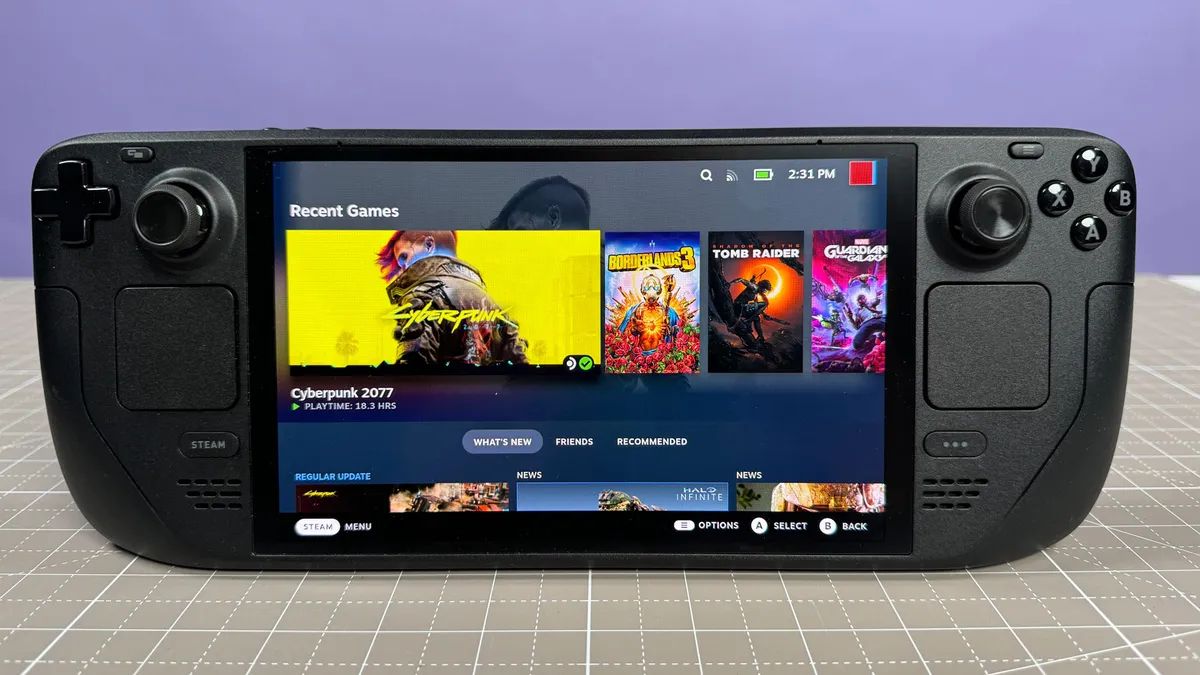
Yeah, a lot of gamers know nothing about any of this conversation. I mean, my coworkers who game and mentioned the Stream Machine this weekend. Of course one was talking Fortnite. So that’s where we’re at. I didn’t even get into why this “console” won’t have one of the more popular games that’s literally free on every other machine including their phone. (I can already hear people saying “is a computer! It should run everything!” And then getting together when you explain how, and saying “it should be simple! It’s a console!”) It’s months away at best anyway. Who knows.
I think the hope isn’t that “maybe this will be big enough”, but “maybe together they’ll be big enough”. Who knows, though. It got a lot of hype on reveal but people are fickle sometimes.




.png?disable=upscale&width=1200&height=630&fit=crop)





I completely agree that huge teams aren’t needed. That said I think at least some of that is exactly because smaller studios full of expert talent were getting funded for several years, because those big studios weren’t making the games developers wanted to make. And those devs understood that “fun” wasn’t the same as “top of the line presentation”.
ARC Raiders’ Embark Studios has a lot of people from DICE. Clair Obscur: Expedition 33’s Sandfall Interactive has a lot of people from Ubisoft. Even Dispatch’s Ad Hoc is a lot of Telltale people (at least some of them by way of Ubisoft.) They knew a lot about their process, but their big companies weren’t making the games they were interested in. So they got funding elsewhere (and famously Ad Hpc’s funding dried up mid-development.)
I’m curious about Wikipedia’s sourcing here. Granted there’s the Balatros and Stardew Valleys of the world, and Helldivers did well. But do smaller games really make up half? Year after year the big ones are usually COD, two big sports game, a Nintendo game, another big fps, a big action game, and a few others.
Again I agree with you when it comes to good games. By man, those big ones are huge sellers. I just wish we had clear insight into sales. But that’s been a thing for a long time now.