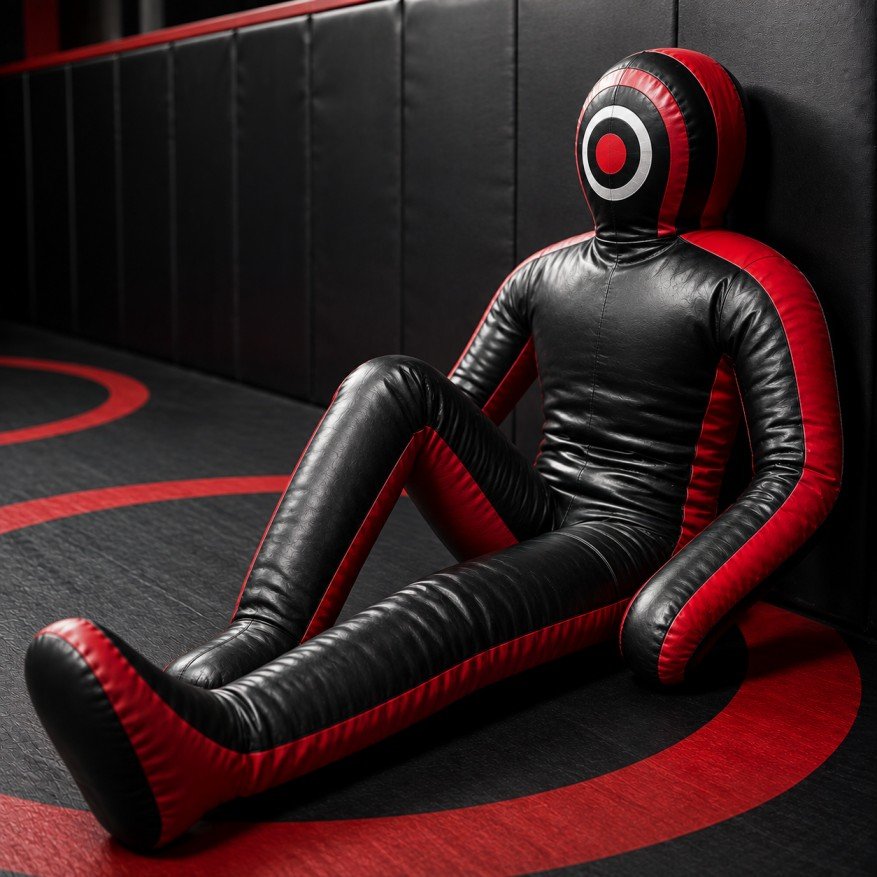
I’ve been thinking about how useful grappling dummies really are for Brazilian Jiu-Jitsu and MMA training.
A dummy obviously can’t replace a live training partner. It doesn’t react, resist, escape, or change position. However, it seems like it could still be useful for getting extra repetitions in when a partner isn’t available.
Some of the things that seem practical to drill with one include:
Positional transitions Mount and side-control movements Submission mechanics Guard-related movements Takedown entries Ground movement Conditioning drills
I’m particularly interested in whether experienced BJJ practitioners actually find them useful over the long term, or whether they mainly benefit beginners who are learning basic movement patterns.
There are also quite a few different types of grappling dummies, so choosing one can be confusing. Size, weight, flexibility, material, filling, and intended use all seem to make a difference.
I recently came across this BJJ grappling dummy guide that goes into some of those differences.
For those who have actually trained with a grappling dummy: What techniques or drills have you found most useful, and do you think they’re worth having at home?
Can a heavy bag or wavemaster improve your striking?
That’s the real comparison, not to a resistive uke.
Also, it isn’t only bjj that a training dummy can be useful in.
Now, useful at home? No fucking clue, those damn things are too expensive. But I suspect that if you can afford one and have the space, it would be a shit ton better than not having one. It’s impossible to practice some things without some kind of partner, and repetition is god.
Your list of use cases is solid, but I’d also add that they can be useful for some throws as well. Not so much because they can really represent an opponent, but because some throws (most, imo) are more about using body mechanics and technique than muscle or even an opponent’s resistance. A good hip throw, you know it’s going to work by the way you cork your hip and pop.
Since that feeling is comparable to a living partner, it’s maybe the perfect example of when a dummy is valuable for solo practice. You get the dummy in the right position, and because it’s so loose, you cam feel that moment better than with someone alive. The dummy responds to the technique perfectly. It’ll fly rather than just slide around when you nail the right technique.
Less so for variations where you’re sweeping instead of a standard hip throw, but you can still feel the shift in mass , if not the whole process. Same with… ahhh, fuck, I gotta look up the phrase.
Sumi gaeshi! Sacrifice throw! That’s another technique where you can feel the opponent’ mass shift when you get it right, and dummy mimics that feeling rather well. We never really used the Japanese terms, even though we did jjj rather than bjj, so I rarely remember those.
Where they fail hard is stuff like arm bars and joint locks, obviously. Not that bjj does a shit ton of wrist locks the way some jjj does lol. But shoulder, elbow, knee, ankles? Nah, you aren’t going to gain anything from dummies for that. Well, maybe one designed for that, but afaik, that isn’t a thing.
When it comes right down to it, training dummies have their place. And, again, if you can afford one and the space to use it, home training is an ideal use case. You just have to temper your expectations
Blowjob job?